
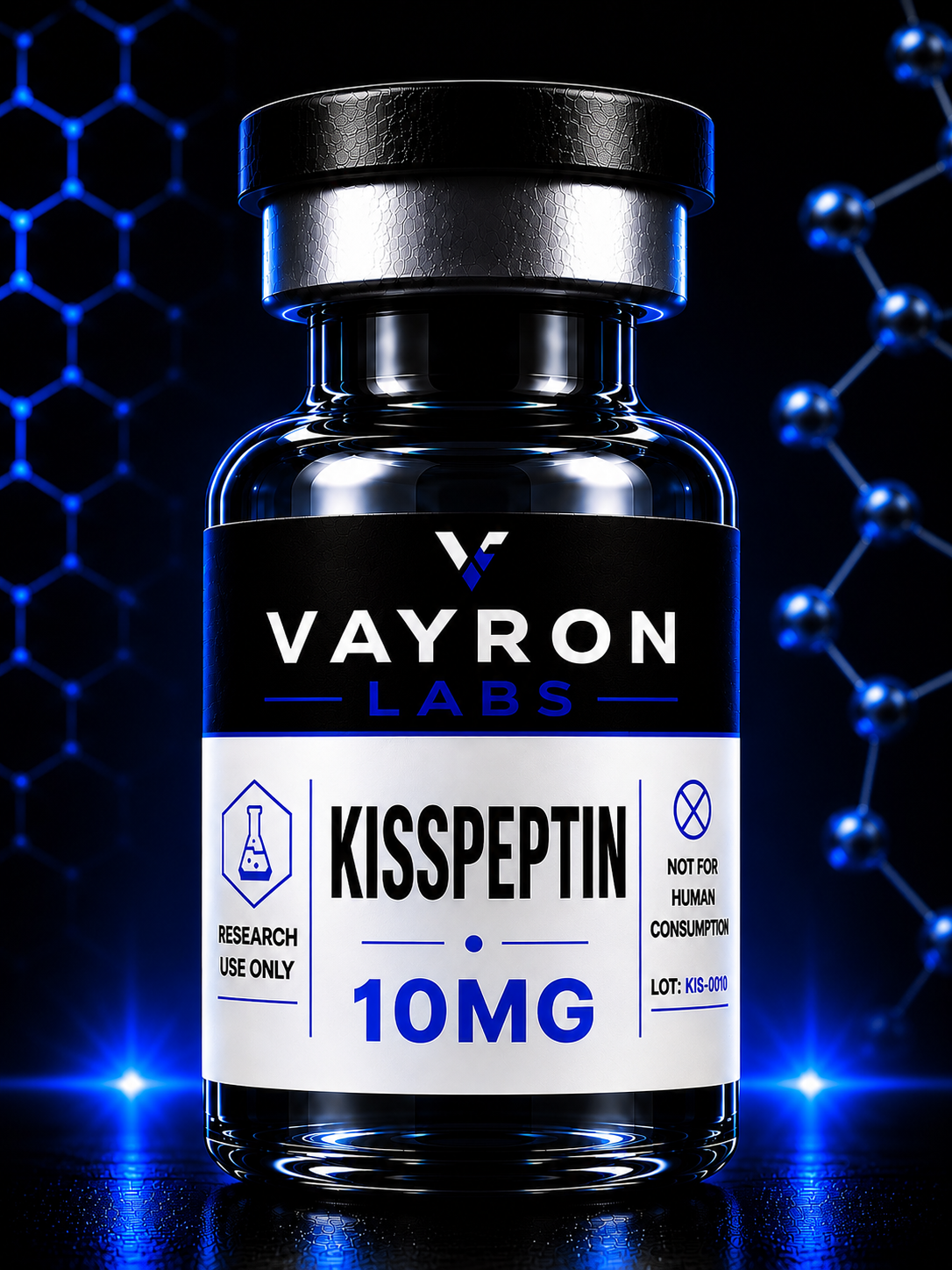
Kisspeptin
$54.99
Availability: 10 in stock
Kisspeptin-10, commonly abbreviated KP-10, is a synthetic decapeptide corresponding to the human Kisspeptin-10 sequence YNWNSFGLRF-NH₂.
The compound is also identified in scientific and chemical reference resources as human metastin 45-54. FDA’s Substance Registration System separately identifies Kisspeptin-10 under the substance name KISSPEPTIN-10.
This product is supplied as a research material for qualified laboratory and scientific applications.
Product Classification
Primary Category: Research Peptides
Scientific Category: Synthetic Decapeptide
Secondary Category: Peptide Research Compounds
Product Type: Research Peptide
Catalog Tags
Kisspeptin-10 · KP-10 · Kisspeptin · Synthetic Decapeptide · Research Peptide · Laboratory Research · Research Material
Chemical Information
Compound: Kisspeptin-10
Abbreviation: KP-10
Alternative Name: Human Metastin 45-54
Peptide Sequence: YNWNSFGLRF-NH₂
CAS Number: 374675-21-5
Molecular Formula: C₆₃H₈₃N₁₇O₁₄
Molecular Weight: Approximately 1,302.4 g/mol
PubChem CID: 25240297
Research Information
Kisspeptin-10 is a defined peptide sequence derived from the human kisspeptin family. It has been investigated in scientific research involving peptide biology and endocrine signaling.
PubChem identifies Kisspeptin-10 as the YNWNSFGLRF-NH₂ peptide and records ongoing and historical research involving the compound.
FDA has evaluated Kisspeptin-10 in the context of compounded drug substances. FDA concluded that the available physicochemical characterization, safety information, and effectiveness evidence weighed against inclusion of Kisspeptin-10 on the 503A Bulks List. FDA specifically identified insufficient information regarding human safety and immunogenicity and insufficient evidence to establish effectiveness for the evaluated medical use.
Accordingly, this product description is intentionally limited to compound identity, chemical characteristics, and research classification. It does not make claims regarding hormonal effects, fertility, testosterone, libido, weight loss, or treatment of any medical condition.
Research Applications
Kisspeptin-10 may be examined as a research material in controlled laboratory environments for purposes such as:
Peptide characterization
Analytical testing
Structural investigation
Molecular research
Peptide receptor research
Comparative peptide studies
Laboratory assay development
Endocrine-signaling research
These statements describe potential research contexts only and do not constitute recommendations for administration to humans or animals.
Product Specifications
Product Name: Kisspeptin-10
Alternative Name: KP-10
Product Type: Synthetic research peptide
Primary Category: Research Peptides
Scientific Classification: Synthetic Decapeptide
Sequence: YNWNSFGLRF-NH₂
CAS: 374675-21-5
Molecular Formula: C₆₃H₈₃N₁₇O₁₄
Molecular Weight: ~1,302.4 g/mol
Intended Application: Laboratory and scientific research
Important Product Information
This product is supplied as a research material. Researchers and purchasers are responsible for ensuring that their intended use complies with applicable laws, regulations, institutional requirements, and laboratory procedures.
Identity matters: “Kisspeptin” can refer to multiple related peptide forms, while the specifications above specifically describe human Kisspeptin-10 (KP-10). Do not apply these specifications to Kisspeptin-54, Kisspeptin-14, or other kisspeptin forms.
Product identity, peptide sequence, purity, analytical results, and other batch-specific specifications should be verified against the applicable Certificate of Analysis (COA).
FDA’s Substance Registration System also cautions that a UNII or substance listing does not imply regulatory review or approval.
Research Use Notice
This product is supplied solely as a research material for qualified laboratory and scientific use.
It is not intended for human consumption, human therapeutic use, veterinary use, diagnosis, treatment, mitigation, or prevention of disease.
Nothing on this product page should be interpreted as a recommendation or representation that Kisspeptin-10 is intended to affect the structure or function of the human body.
Not for use as a drug, dietary supplement, food, cosmetic, or medical treatment.
For laboratory research purposes only.
Related products
-
-
Sale!
-
Sale!
-
 Research Peptides
MOTS-C
Price range: $55.00 through $165.00 Select options This product has multiple variants. The options may be chosen on the product page