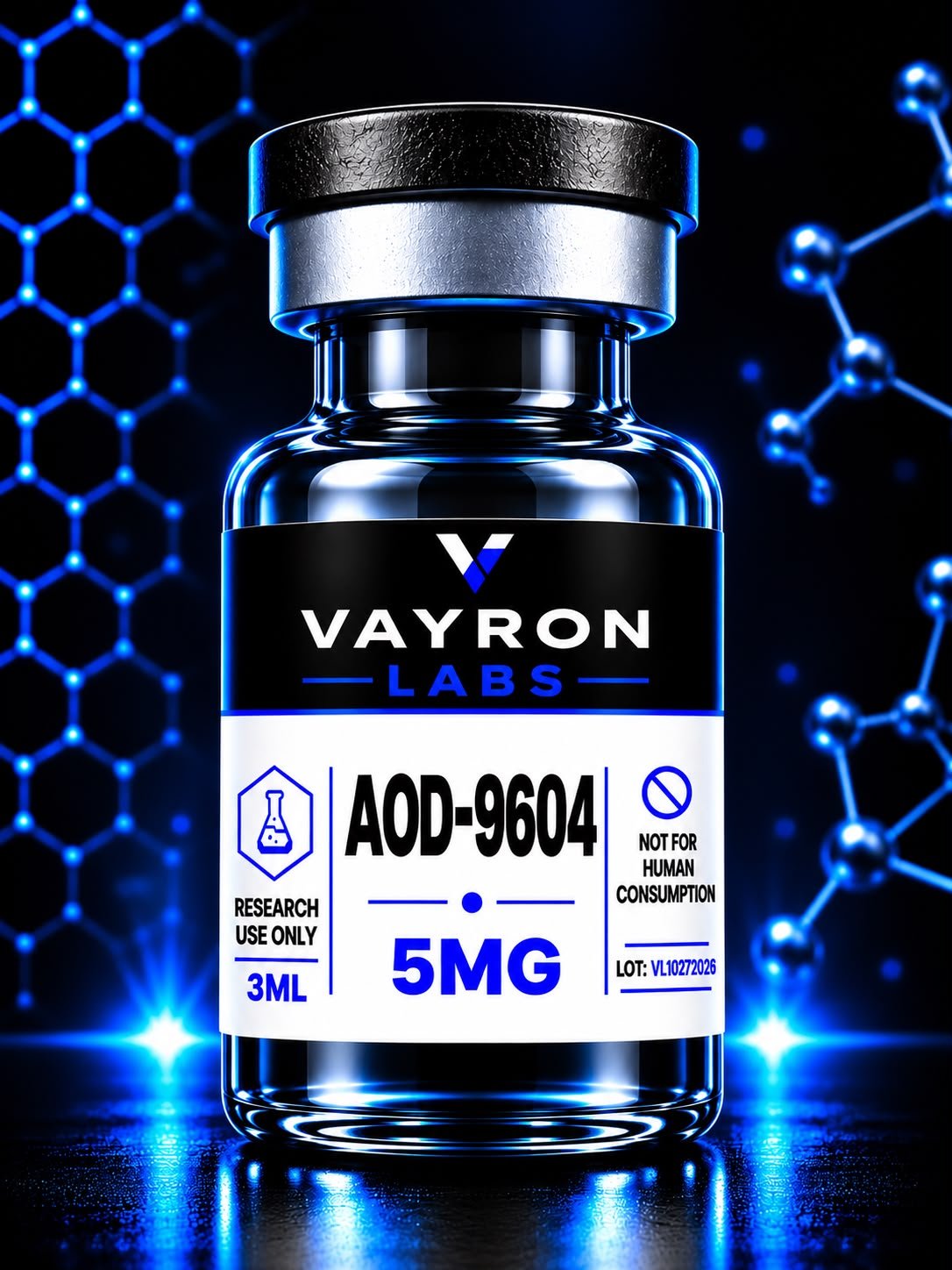
AOD-9604
$44.95
AOD-9604 is a synthetic 16-amino-acid peptide fragment derived from the C-terminal region of human growth hormone (hGH). It was originally developed for research into fat metabolism and body-weight regulation, with particular interest in its proposed ability to influence lipolysis (the breakdown of stored fat). AOD-9604 has been investigated in laboratory and animal studies examining lipid metabolism, adipose tissue activity, and metabolic processes. However, its effectiveness as a weight-management treatment has not been established.
Availability: 8 in stock
AOD-9604 is a synthetic peptide developed from the C-terminal region of human growth hormone, specifically amino acids 177–191, with an additional tyrosine residue. It was originally investigated as a potential approach to understanding fat metabolism and body-weight regulation.
Unlike full-length human growth hormone, AOD-9604 was designed to investigate specific metabolic pathways associated with fat breakdown without reproducing all the biological activities of the complete hormone. Its proposed mechanism has generated research interest in lipolysis, adipose tissue metabolism, and the biological processes involved in fat storage and utilization.
Compendium+1
Where the interest is
-
Fat metabolism research: AOD-9604 has been investigated for its potential influence on lipolysis, the biological process through which stored triglycerides are broken down into fatty acids.
-
Adipose tissue activity: Research has examined its relationship with fat-cell metabolism and the mechanisms involved in fat storage and breakdown.
-
Metabolic research: Scientists have explored its potential relevance to energy metabolism and biological pathways associated with body-weight regulation.
What to expect
AOD-9604 remains an investigational peptide, and its research history includes laboratory studies, animal experiments, and historical human clinical development.
Importantly, human research did not establish a convincing weight-loss benefit over placebo. The FDA’s December 2024 review also identified insufficient safety information, particularly regarding proposed injectable and topical formulations, as well as concerns about potential immunogenicity and long-term use.
U.S. Food and Drug Administration+1
Although AOD-9604 has generated interest in metabolic research, it should not be presented as a proven fat-loss treatment or as an established alternative to approved weight-management therapies. Its safety, effectiveness, and appropriate clinical applications remain insufficiently established.
Research use only. Not for human or veterinary use.
Related products
-
Sale!
 Uncategorized
VRX-2TZ
Price range: $89.95 through $179.95 Select options This product has multiple variants. The options may be chosen on the product page -
Sale!
 Uncategorized
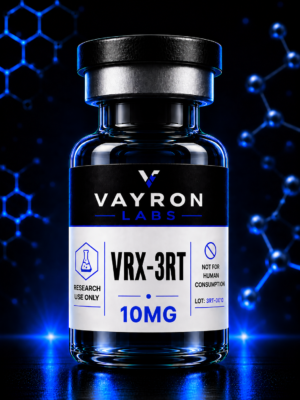
VRX-3RT
Price range: $64.95 through $149.95 Select options This product has multiple variants. The options may be chosen on the product page -
Sale!
 Uncategorized
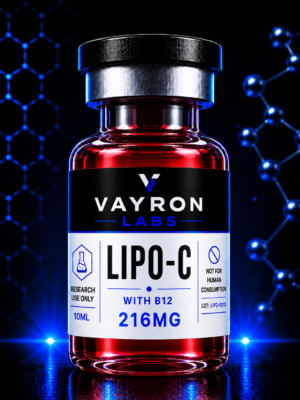
Lipo-C with B12
Original price was: $75.00.$64.95Current price is: $64.95. Add to cart