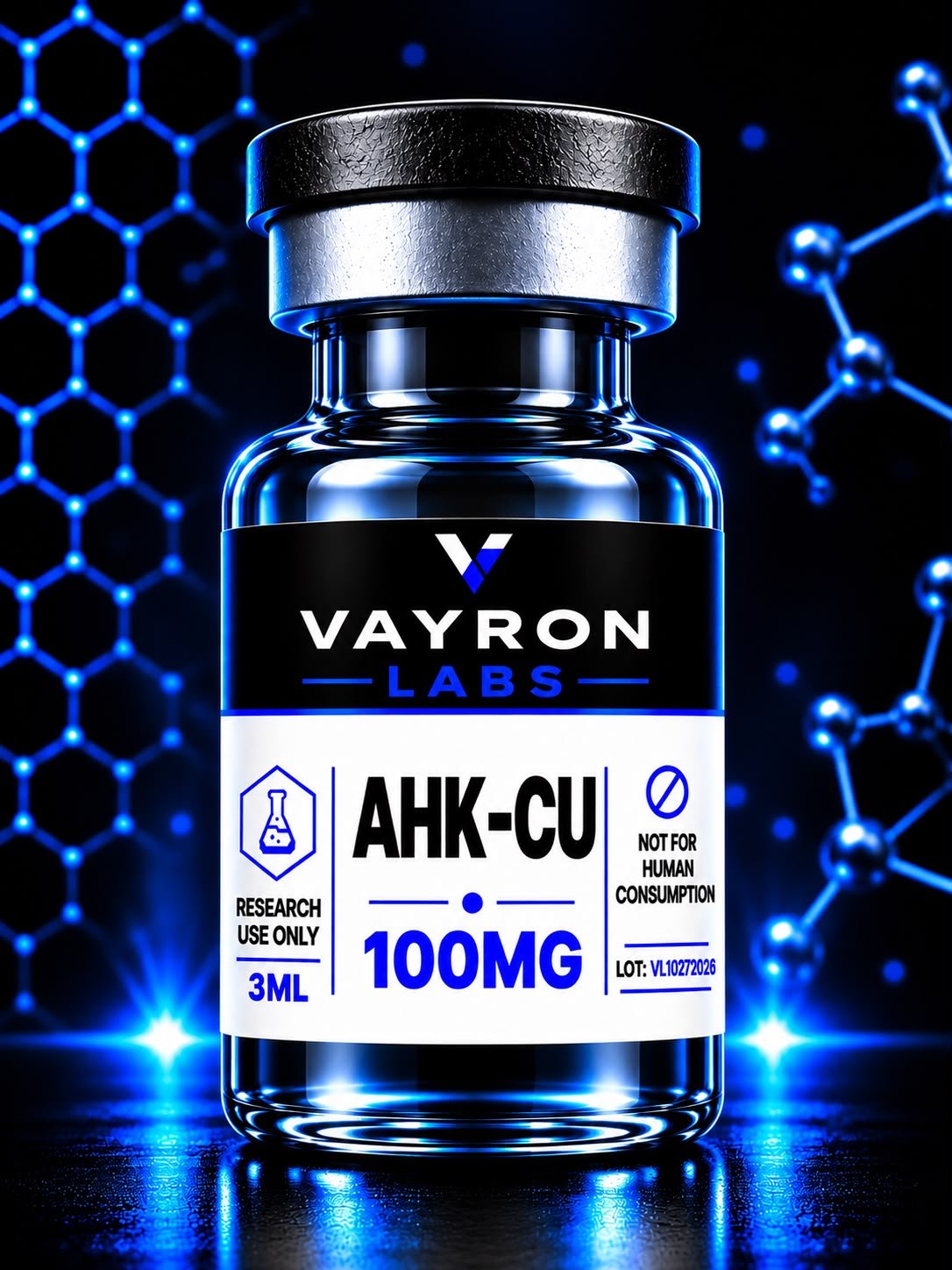
AHK-cu
$54.95
AHK-Cu is a copper-binding tripeptide composed of three amino acids: alanine, histidine, and lysine, combined with copper ions. It is a close structural relative of GHK-Cu and has attracted research interest in hair-follicle biology, dermal papilla cell activity, and cellular signaling associated with hair and skin research. Preliminary laboratory studies have explored its relationship with hair-follicle growth and cellular activity, although human clinical evidence remains very limited.
Availability: 5 in stock
AHK-Cu (L-Alanyl-L-Histidyl-L-Lysine Copper) is a synthetic copper-binding tripeptide consisting of the amino acids alanine, histidine, and lysine. It belongs to the broader family of copper-peptide complexes and shares structural similarities with GHK-Cu, another well-known copper-binding peptide studied in skin biology and tissue-related research.
AHK-Cu has generated particular scientific interest in hair-follicle research because of its potential interaction with dermal papilla cells, specialized cells located at the base of hair follicles that play an important role in regulating the hair growth cycle. Laboratory investigations have examined its relationship with cellular proliferation, follicle activity, and signaling pathways associated with hair biology.
Open Assay+1
Where the interest is
-
Hair-follicle research: Laboratory studies have investigated AHK-Cu in relation to hair-follicle elongation and cellular activity within the follicle.
-
Dermal papilla activity: Research has explored its relationship with dermal papilla cell proliferation and biological signaling involved in hair-follicle regulation.
-
Copper-peptide research: Its structural relationship with GHK-Cu has generated interest in copper-dependent cellular processes and broader skin and hair biology.
What to expect
AHK-Cu remains an experimental copper-peptide compound, with a relatively limited scientific evidence base. One notable 2007 laboratory study reported increased growth of isolated human hair follicles and changes in dermal papilla cell activity under controlled experimental conditions. However, these findings were obtained outside the human body and do not establish that AHK-Cu produces hair growth in people.
AKH BioLabs+1
There are currently no established human clinical trials demonstrating its effectiveness for hair growth, skin rejuvenation, or other therapeutic applications. Its safety profile, optimal formulation, long-term effects, and appropriate clinical applications also remain insufficiently characterized.
AHK-Cu should therefore be approached as a research compound rather than a proven hair-growth or skin-treatment solution. Findings involving GHK-Cu should not automatically be attributed to AHK-Cu, as the two are distinct compounds.
Research use only. Not for human or veterinary use.
Related products
-
Sale!
 Uncategorized
VRX-3RT
Price range: $64.95 through $149.95 Select options This product has multiple variants. The options may be chosen on the product page -
 Uncategorized
Ara-290
$54.95 Select options This product has multiple variants. The options may be chosen on the product page -
Sale!
-
 Uncategorized
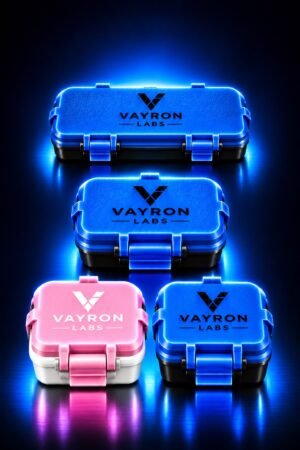
Vayron Lab Vials boxes
Price range: $11.95 through $19.95 Select options This product has multiple variants. The options may be chosen on the product page